
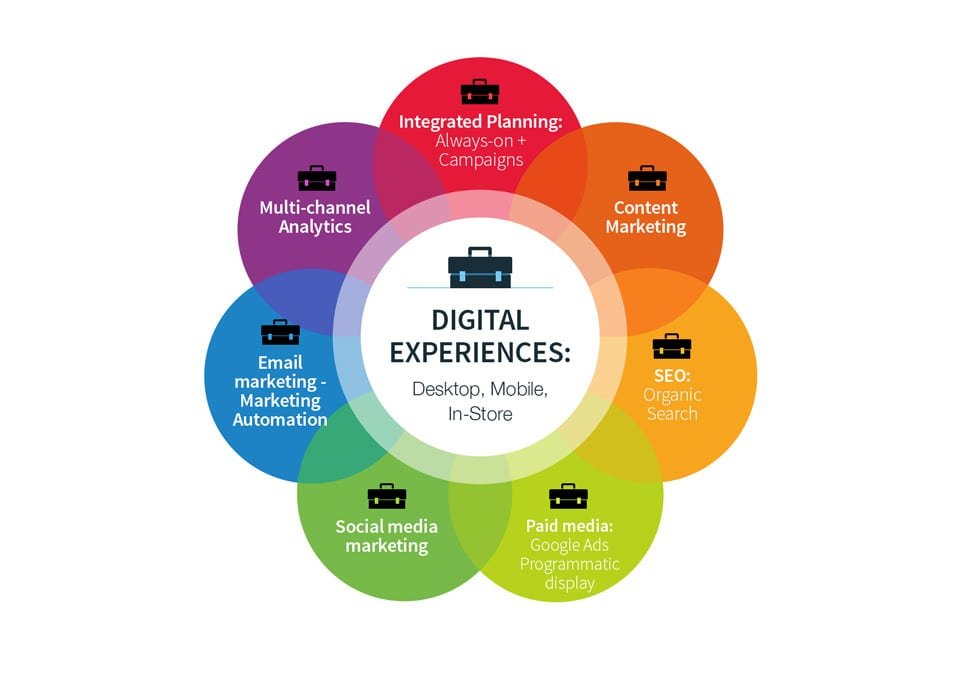
The digital marketing industry is changing faster than ever. New technologies, changing customer expectations, social media platforms, and data-driven strategies are continuously transforming the way businesses reach their audiences. What worked successfully a few years ago may not produce the same results today.
Digital marketing has become a crucial driver of business growth. Whether it is a small local business, an online store, or a large multinational company, organizations use digital channels to attract customers, build brand awareness, generate leads, and increase sales.
As technology continues to develop, marketers need to understand emerging trends and prepare strategies for the future. Artificial intelligence, personalization, short-form video, social commerce, voice search, automation, and data analytics are some of the major developments shaping the future of digital marketing.
What Is Digital Marketing?
Digital marketing refers to promoting products, services, or brands through digital channels. These channels include search engines, websites, social media platforms, email, mobile applications, online advertisements, and other digital platforms.
Unlike traditional marketing, digital marketing allows businesses to communicate with customers more directly and measure campaign performance using data.
For example, a company can determine how many people viewed an advertisement, clicked on it, visited its website, and eventually purchased a product. This ability to measure results makes digital marketing a powerful tool for businesses.
However, digital marketing is not static.Both consumer behavior and technological trends are evolving rapidly. Therefore, businesses need to continuously update their strategies.
1. Artificial Intelligence in Digital Marketing
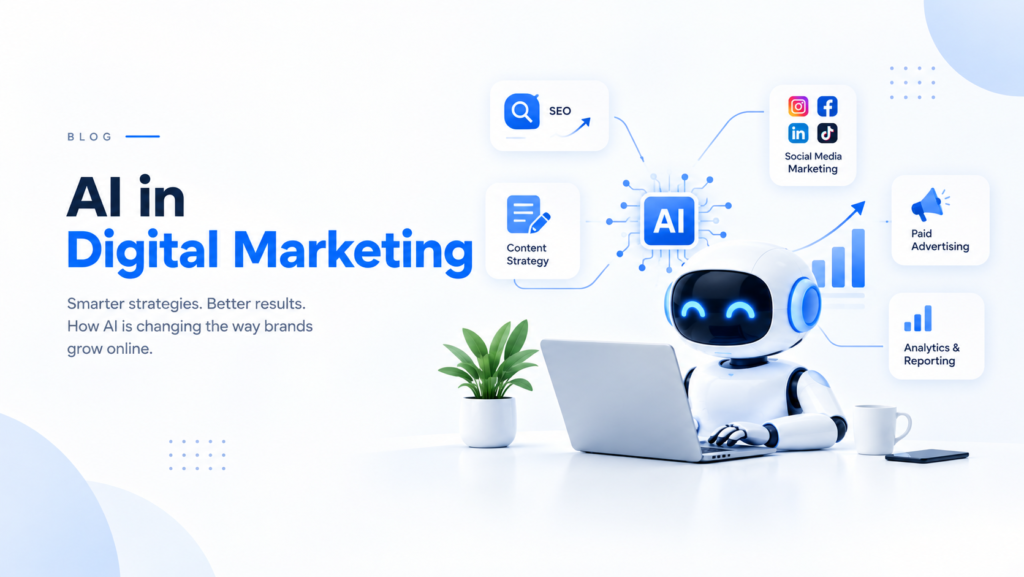
Artificial Intelligence (AI) is one of the biggest trends influencing digital marketing.
AI can analyze large amounts of data, identify customer behavior patterns, automate repetitive tasks, generate content, and help businesses personalize customer experiences.
Marketers can use AI to generate content ideas, analyze campaigns, create advertisements, predict customer behavior, and provide automated customer support through chatbots.
Generative AI is also changing the content creation process. Marketers can use AI-assisted tools to create drafts, social media captions, product descriptions, images, and other marketing materials.
However, human creativity and judgment remain important. Businesses should review AI-generated content for accuracy, originality, brand consistency, and relevance.
In the future, successful marketers will likely focus on combining AI capabilities with human creativity and strategic thinking.
2. Personalization Will Become More Important
Customers are increasingly exposed to large amounts of online content and advertising. As a result, generic marketing messages may not attract enough attention.
Personalization allows businesses to provide content and offers based on customer interests, preferences, and behavior.
For example, an online retailer may recommend products based on a customer’s previous purchases or browsing activity. An email campaign may display different products for different customer groups.
Personalization can make marketing more relevant and improve customer engagement.
Future marketing strategies will increasingly focus on delivering the right message to the right customer at the right time while respecting privacy and user preferences.
3. Short-Form Video Marketing
Short-form videos have become a major part of online communication. Platforms such as Instagram, YouTube, and other social networks have made short videos an important format for brands and creators.
Short videos can quickly communicate ideas, demonstrate products, answer questions, or entertain audiences.
Businesses can use short-form video for product demonstrations, tutorials, behind-the-scenes content, customer testimonials, educational content, and promotional campaigns.
The future of video marketing will likely involve more interactive, personalized, and platform-specific content.
Companies should not simply copy the same video across every platform. Instead, they should understand the audience and content style of each platform.
4. Social Commerce
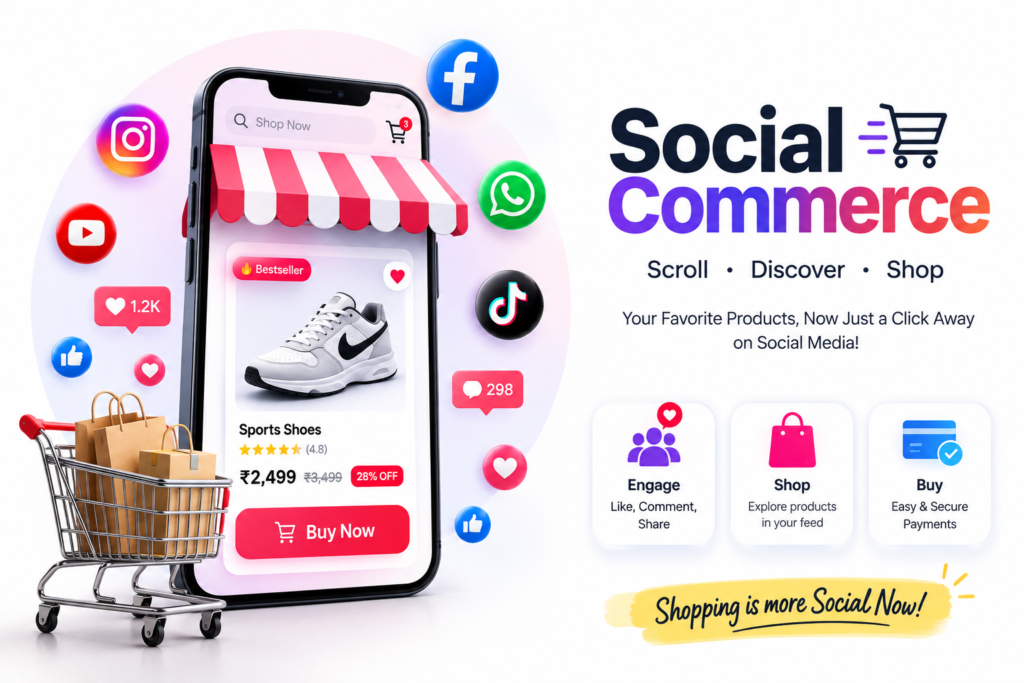
Social media is no longer only a place for communication and entertainment. It has increasingly become a shopping environment.
Social commerce allows customers to discover products, interact with brands, and sometimes complete purchases through social platforms or connected shopping experiences.
This creates a shorter path between product discovery and purchase.
For businesses, social commerce provides an opportunity to turn social engagement into sales. Product demonstrations, creator recommendations, customer reviews, and interactive content can influence purchasing decisions.
In the future, social platforms are likely to become even more integrated with e-commerce.
5. Voice Search and Conversational Marketing
Voice technology has changed the way some users search for information. People can use voice assistants and voice-enabled devices to ask questions, find businesses, and obtain information.
This creates new opportunities for marketers.
Businesses can prepare for voice search by creating clear, useful content that answers common customer questions. Local businesses can also focus on providing accurate business information online.
At the same time, conversational marketing is becoming more important. Chatbots, messaging platforms, and AI assistants allow businesses to communicate with customers more quickly.
The future may involve increasingly natural conversations between customers and AI-powered systems, with human employees handling more complex situations.
6. Search Engine Optimization Is Evolving
Search Engine Optimization, or SEO, remains an important digital marketing strategy, but the search environment is changing.
Search engines are becoming better at understanding user intent and the meaning behind queries. At the same time, users may discover information through social platforms, video platforms, AI-powered search experiences, and other digital channels.
Future SEO strategies will therefore need to focus on more than keywords.
Businesses should create helpful, trustworthy, original, and user-focused content. Websites should also provide a good user experience, work well on mobile devices, load efficiently, and make information easy to understand.
SEO will increasingly be about becoming a trusted source of information rather than simply trying to rank for individual keywords.
7. Marketing Automation
Marketing automation helps businesses perform repetitive marketing tasks automatically.
Examples include automated email sequences, lead nurturing, customer segmentation, campaign scheduling, and personalized follow-ups.
Automation can save time and help businesses communicate with customers consistently.
For example, when someone signs up for a newsletter, an automated system can send a welcome email. Additional messages can then be sent based on the person’s interactions.
Future automation systems will become more intelligent by using AI to determine what message should be delivered, when it should be delivered, and which customers should receive it.
8. Data-Driven Marketing
Data is becoming increasingly important in digital marketing.
Businesses can collect information about website visitors, advertising campaigns, social media engagement, customer purchases, email performance, and other interactions.
Digital marketing analytics helps marketers turn this information into useful insights.
For example, marketers can compare different advertising campaigns to determine which one generates more customers. They can also identify where customers leave the buying process and improve that stage of the customer journey.
Future marketing strategies will rely heavily on data, but businesses must also focus on responsible data collection and privacy.
9. Privacy and Ethical Marketing
As businesses collect more customer data, privacy is becoming an increasingly important issue.
Customers want to know how their information is being collected, stored, and used. Businesses that fail to handle personal information responsibly can lose customer trust and may face legal or regulatory consequences.
Future digital marketing strategies will therefore need to balance personalization with privacy.
Companies should be transparent about data collection, respect user preferences, protect customer information, and follow applicable privacy requirements.
Ethical marketing will become an important part of building long-term relationships with customers.
10. Influencer and Creator Marketing
Influencer marketing continues to evolve. Brands are increasingly working with creators who have highly engaged audiences.
Large celebrities are not the only option. Smaller creators can sometimes provide stronger connections with specific communities or niche audiences.
Future influencer marketing strategies will focus more heavily on authenticity, audience relevance, engagement, and measurable business results.
Instead of simply paying influencers to promote products, businesses may build long-term partnerships with creators who genuinely understand and use their products.
11. Interactive Content
Traditional content is often passive. Users read an article or watch a video. Interactive content allows users to participate.
Examples include quizzes, polls, calculators, interactive videos, surveys, games, and personalized tools.
Interactive content can increase engagement because users actively participate in the experience.
For example, a fitness company could create an online quiz that recommends a workout plan based on a user’s answers. A financial company could create a calculator that helps users estimate savings.
Future marketing campaigns are likely to use more interactive experiences to capture attention and collect useful insights.
12. Omnichannel Marketing
Customers interact with brands through multiple channels. They may discover a company through social media, visit its website, receive an email, search for reviews, and finally purchase through a mobile device.
Omnichannel marketing focuses on creating a consistent customer experience across these different channels.
The goal is to ensure that customers do not feel like they are interacting with completely different companies on different platforms.
Future strategies will increasingly connect websites, social media, email, mobile applications, advertising, customer service, and physical stores where applicable.
Future Strategies for Successful Digital Marketing
Understanding trends is important, but businesses also need practical strategies to take advantage of them.
Focus on the Customer
Businesses should understand their target audience before choosing marketing channels. Customer needs, problems, preferences, and behavior should guide marketing decisions.
Invest in Quality Content
Technology may change, but useful content will remain important. Businesses should create content that educates, entertains, solves problems, or helps customers make better decisions.
Use AI Responsibly
AI can improve productivity, but businesses should maintain human oversight. AI should support creativity and decision-making rather than replace critical thinking.
Measure Performance
Businesses should establish clear goals and track meaningful metrics. Website traffic, leads, conversion rates, customer acquisition costs, engagement, and revenue can help evaluate performance.
Adapt Quickly
Digital marketing changes rapidly. Businesses should experiment with new formats and platforms while continuously evaluating results.
Build Trust
Trust is becoming one of the most valuable assets in digital marketing. Businesses should provide accurate information, protect customer data, communicate honestly, and deliver on their promises.
Conclusion
Digital marketing is entering a new era driven by artificial intelligence, personalization, video, automation, social commerce, analytics, and changing customer expectations.
The future will not belong simply to businesses that use the newest technology. It will belong to businesses that know how to use technology strategically while maintaining creativity, authenticity, privacy, and customer trust.
AI will help marketers analyze information and automate tasks. Personalization will make customer experiences more relevant. Video and social commerce will create new ways to engage audiences. Data analytics will help businesses make smarter decisions, while ethical practices will become increasingly important.
The most successful digital marketing strategy will therefore be a combination of technology and human understanding.
Businesses that continuously learn, experiment, measure results, and adapt to changing customer needs will be better prepared for the future. Digital marketing will continue to evolve, but its fundamental purpose will remain the same: connect the right audience with the right message and create genuine value for customers.